
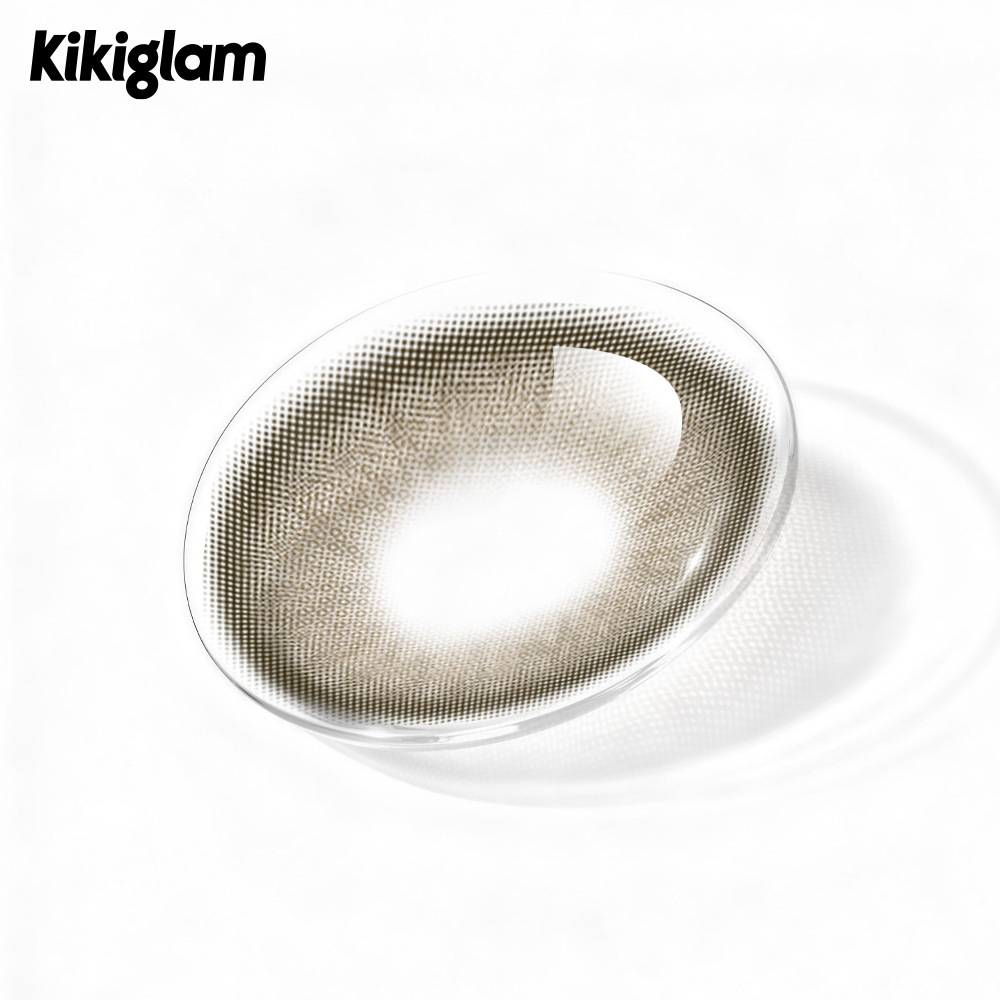
Reed Hazel sits in the narrow band between hazel and brown: a chestnut-hazel core, a mid-band that drifts into reed brown with a thread of olive, and a rim that stops at soft hazelnut rather than closing into a hard outline.
That combination is what makes hazel contact lenses difficult to shop for. Hazel is not one colour but a relationship between a warmer centre and a cooler outer zone, and on brown eyes the visible result depends on how much of that relationship survives the wearer’s own melanin. Kikiglam presents Reed Hazel as a riverside-reed interpretation of hazel rather than a honey or gold one, so the question a buyer should ask is not whether it is natural in general, but whether the specific balance of chestnut, reed, and olive matches the eye they already have. Want the look for yourself? Shop the Kikiglam Reed Hazel 1-Year Contact Lenses ($5.99)
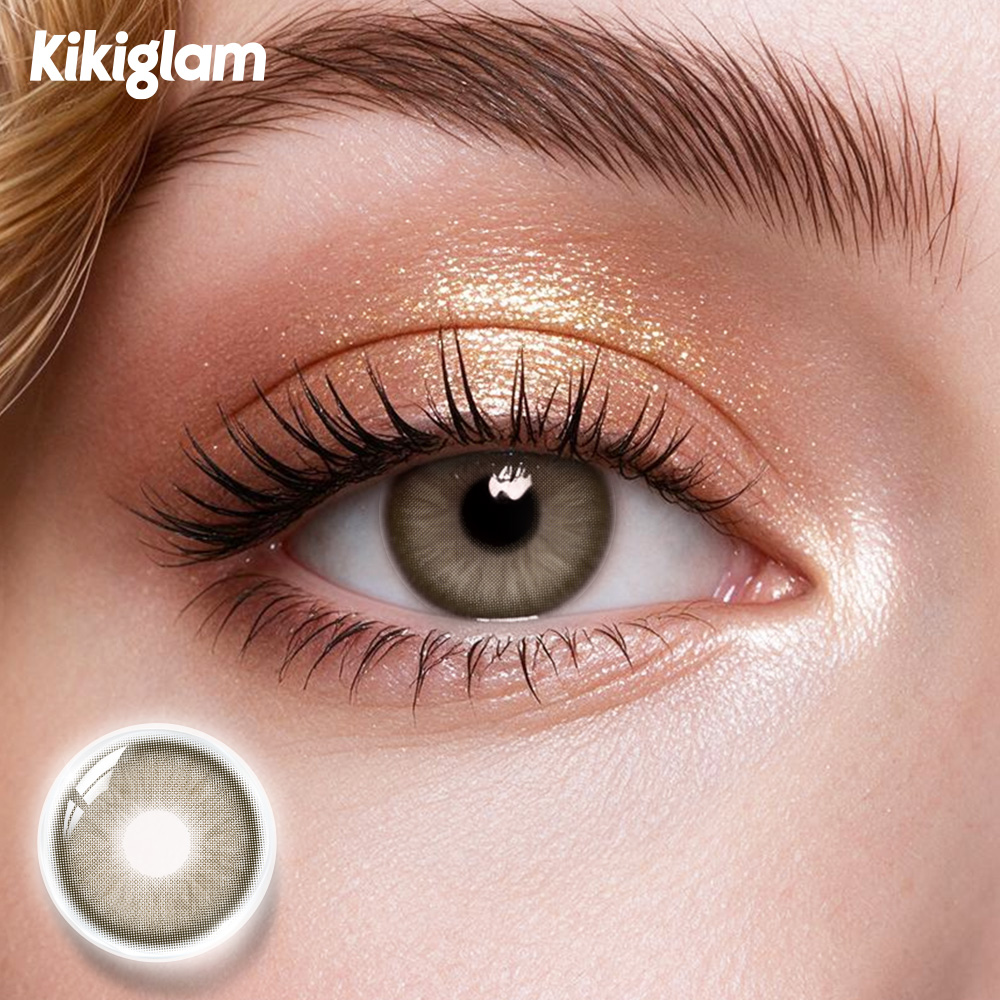
1. Melanin density decides how much hazel actually shows.
 Many hazel and chestnut designs wash out on brown irises, because the pigmented pattern is too light or too sparse to sit against a deep base. Reed Hazel is built the other way round: the hazelnut and reed flecks are dense enough to remain visible on a brown base, which is why the shade reads as a believable shift rather than a pale overlay. On a lighter brown eye the same lens looks warmer and closer to chestnut; on a dark brown eye it reads cooler, with the olive note doing more of the work.
2. The olive thread is what keeps it from turning honey.
 A hazel lens becomes honey-gold when the centre is bright and the transition is smooth. Reed Hazel avoids that by carrying a muted olive note through the mid-band, which cools the overall impression and keeps the shade earthy. This is the detail to check first if you have been disappointed by hazel lenses that looked too sweet, too yellow, or too glassy in daylight. The olive is subtle, but it is the reason the result reads as reed brown rather than caramel.
3. The rim decides whether the eye looks soft or defined.
 The outer band of Reed Hazel stops at a soft hazelnut shell rather than a black ring. A softer rim keeps the transition continuous with the natural iris, so the lens reads as depth rather than as a drawn outline; a harder rim would immediately make the same colours look graphic. On brown eyes this is the difference between a hazel that looks inherited and one that looks applied, and it is the main reason the design works for everyday wear.
4. Light changes which layer of the blend you notice.
The reed-brown mid-band stays quiet in overcast and indoor light, where the eye reads as a soft chestnut hazel. In late sun the hazelnut deepens and warms, and in bright direct light the olive flecks separate and the lens looks more obviously patterned. Anyone comparing a hazel contact lens photo to their own mirror should account for that, because the studio image is usually closer to the bright-light version than to an office-lit one.
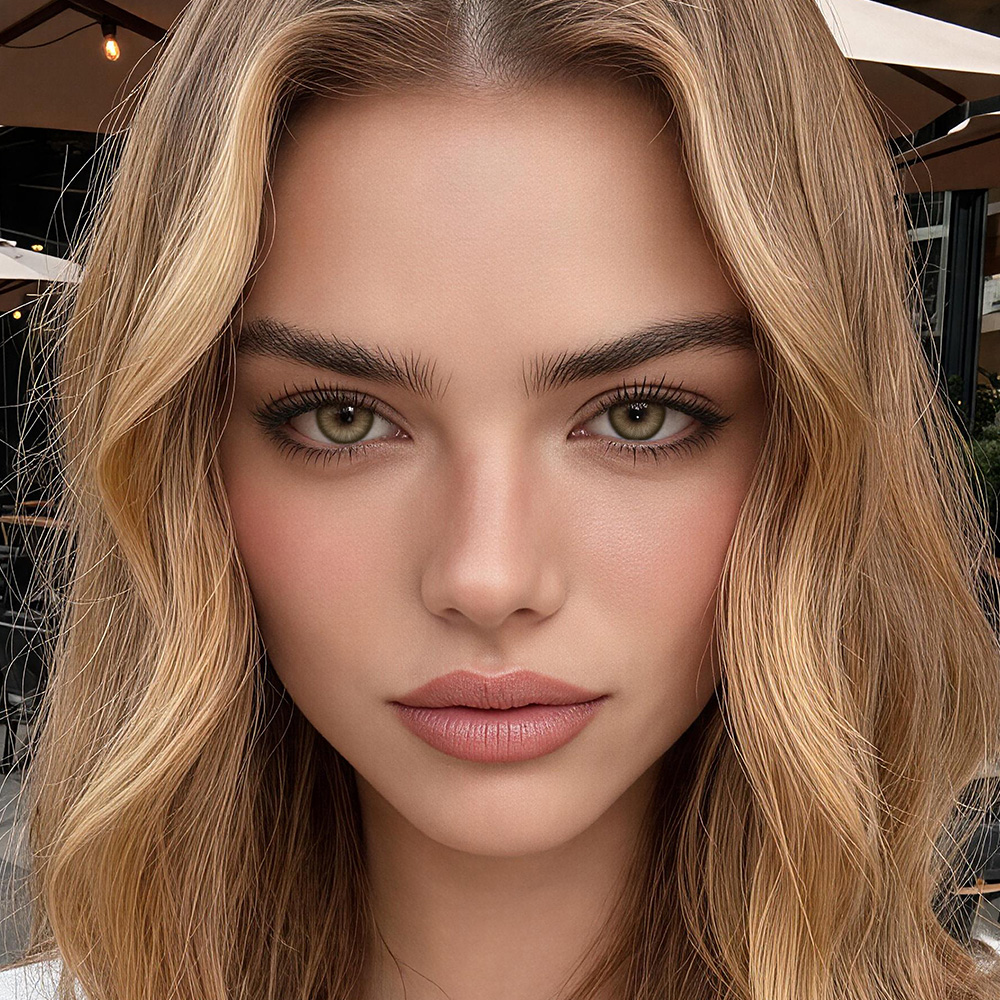
 The product description is unusually specific about its own colour logic, and that is worth reading literally. It describes the centre as chestnut-hazel, the mid-band as reed brown with a thread of olive, and the rim as soft hazelnut shell, then states that the effect is depth rather than dye. That is a description of a blended ring design, where the tones settle into each other instead of glowing, and it tells you what to expect more accurately than the name alone.
The listed specifications describe the product rather than promising an outcome. Reed Hazel is a 2pcs, 1-year lens with a 14.5mm diameter and a 13.9mm graphic diameter, cast with a 0.08mm profile, 40% water content, and an 8.6mm base curve. The slightly wider graphic diameter means the colour zone covers more of the visible iris than a smaller design would, which matters on brown eyes: more coloured area means the hazel shift stays visible, but it also means the lens reads as a stronger change than a narrow-ringed one.
Read together, the copy and the specifications say the same thing: this is a hazel built around a muted, earthy palette and a soft edge, sized to make that palette legible on a darker iris. They do not promise a particular result on a particular face, and the material and construction notes describe how the lens is presented rather than guaranteeing comfort for every wearer.
 Shoppers searching for natural colored contacts usually mean one of two things: a lens that mimics a colour they could plausibly have been born with, or a lens that looks unprocessed in photos. Reed Hazel is aimed at the first. The chestnut and reed palette sits inside the range of natural hazel-brown irises, and the soft rim keeps the edge from looking drawn, which is what makes the shade read as inherited rather than applied. It is not a neutral lens, though: a 13.9mm graphic diameter covers a substantial part of the iris, so the colour is meant to be seen.
The phrase colored contacts for dark eyes creates a similar expectation gap. On a deep brown iris, a hazel lens can only read as hazel if the pattern is dense and the palette is muted enough to blend with melanin; a bright or highly reflective design will instead look like a distinct overlay. Reed Hazel is designed for that constraint, but the honest expectation is a believable chestnut-reed shift, not a literal reproduction of a light hazel iris.
The decision path that follows is straightforward. Match the palette to the eye you have, check whether the graphic diameter suits the amount of colour change you want, and confirm fit and prescription needs with an eye care professional before ordering. Decorative lenses are still contact lenses, and the guidance around them exists because fit and care matter as much as colour.
Reed Hazel is best understood as a condition-based hazel: its result depends on how much melanin sits under it, whether the olive note survives the lighting, and how much of the iris the 13.9mm colour zone covers. That makes it a reasonable choice for brown-eyed wearers who want an earthy chestnut-hazel rather than a honey or gold one, and a less suitable one for anyone expecting a light, airy hazel. The practical next step is to compare the three colour zones in the product images against your own iris in ordinary light, then decide whether that balance is the look you want.
Q: Do Reed Hazel contacts show up on dark brown eyes?
A: They are designed to, because the hazelnut and reed flecks are dense enough to stay visible against a brown base, and the olive mid-band keeps the shade from fading into the iris. On very dark eyes the result reads cooler and more muted than on medium brown eyes, where the chestnut centre is more apparent.
Q: How is Reed Hazel different from a honey or gold hazel lens?
A: The difference is the mid-band. A honey or gold hazel brightens the centre and smooths the transition, which produces a sweeter, warmer eye. Reed Hazel carries a muted olive thread through the middle instead, which cools the overall impression and keeps the result in chestnut and reed tones rather than drifting toward gold.
Q: Is a 13.9mm graphic diameter too much colour for everyday wear?
A: It depends on the contrast the palette creates rather than on the number alone. Reed Hazel uses muted earthy tones and a soft hazelnut rim, so the wider colour zone reads as depth in ordinary light rather than as a hard outline. In bright direct light the pattern becomes more visible, which is the version to judge it by if you want a subtle result.
FDA - Decorative Contact Lenses for Halloween and More
American Academy of Ophthalmology - Decorative Contact Lenses
2pcs Kikiglam Reed Hazel | 1-Year Contact Lenses




